
Grief-Focused Art Therapy in Gaithersburg, MD
Supporting children, tweens, teens, and adults navigating grief and loss, emotional overwhelm, and significant life transitions.
When words are not enough, there are other ways to express what you’re carrying.
Schedule a Complimentary 20-Minute Consultation →
Currently Accepting New Clients
In-person art therapy in Gaithersburg, Maryland, with evening and after-school appointments available.
Looking for a therapist? Explore the DMV Therapists Directory or find a local therapist who meets your needs.


When Words Are Not Enough
You’re carrying a weight that isn’t easily seen. Maybe you’ve been trying to hold everything together, show up for the people who need you, and keep moving forward, even when so much feels different inside.
You may feel exhausted in ways that are difficult to explain. Maybe you find yourself wondering when things will feel okay again, why everyday life feels harder than it used to, or how to make sense of everything you’ve been carrying.
Sometimes, you don't even know where to begin. You just know something hurts, something has changed, or something inside you needs attention.
You don't need to carry it all alone. You don't need to try harder, find the right words, or have everything figured out before asking for support. You're doing the best you can with what you've been carrying.
Grief, loss, trauma, and significant life transitions can affect how you see yourself, connect with others, and move through the world. And sometimes, talking about it isn't easy. The feelings may be complicated, the words may not come, or you may not yet understand what you're experiencing yourself.
Art therapy offers another way.
At The 3 Brushes, LLC, I provide grief-focused art therapy for children, tweens, teens, and adults in Gaithersburg and Montgomery County, Maryland. Through creative expression and therapeutic conversation, we can begin exploring what's difficult to express, making space for your experiences, and discovering what support and healing might look like for you.
You don't need artistic talent or previous experience. You don't need to know what to create. You can begin exactly where you are.
Schedule a Complimentary 20-Minute Consultation →
No artistic experience is necessary. You don't have to know what to create, either.
When Grief Changes Everything
Grief doesn't follow a predictable path. Loss can change how you see yourself, relate to others, and move through everyday life. It can follow the death of someone you love, but grief can also accompany other significant losses and changes.
You may be grieving a relationship, a role, a sense of identity, a way of life, or the future you thought you would have.
Sometimes grief doesn't feel like sadness. It may show up as anger, anxiety, numbness, confusion, exhaustion, disconnection, or a sense that you no longer recognize yourself.
You may feel caught between the life you knew and a future you haven't yet learned how to imagine.
You don't have to make sense of everything at once. Art therapy offers a space to explore what you're carrying, honor what matters, and begin discovering what healing might look like for you.
Explore Art Therapy for Grief & Loss →
Begin Where You Are
You don't need to know exactly what kind of support you need before reaching out. Whether you're looking for support for yourself or your child or teen, we can begin with what you're experiencing right now.
I'm Looking for Support for Myself
Perhaps you're navigating grief or loss, emotional overwhelm, trauma, an identity shift, or a major life transition. You may be trying to understand what has changed, reconnect with yourself, or find a way forward when life no longer feels the way it once did.
Art therapy offers a supportive space to explore your experiences through creative expression and therapeutic conversation, at a pace that feels right for you.
Explore Art Therapy for Adults →
I'm Looking for Support for My Child or Teen
When a child or teen is struggling, it isn't always easy for them to explain what they're feeling. You may notice changes in their behavior, mood, relationships, or ability to navigate everyday life, while feeling unsure how best to help.
Art therapy offers children, tweens, and teens another way to express emotions, explore grief and change, and develop coping skills and self-awareness.
Sessions are tailored to each person's age, developmental needs, readiness, and therapeutic goals. Parents, caregivers, and legal guardians are included thoughtfully and collaboratively, with appropriate attention to the child's or teen's privacy.
Explore Art Therapy for Children and Tweens →
Explore Art Therapy for Teens→
Not Sure Where to Begin?
Taking the first step can feel difficult when you're already carrying so much. You don't need to have the right words or know exactly what to ask.
A complimentary 20-minute consultation offers an opportunity to ask questions, share a little about what brings you here, and explore whether art therapy may be a good fit.
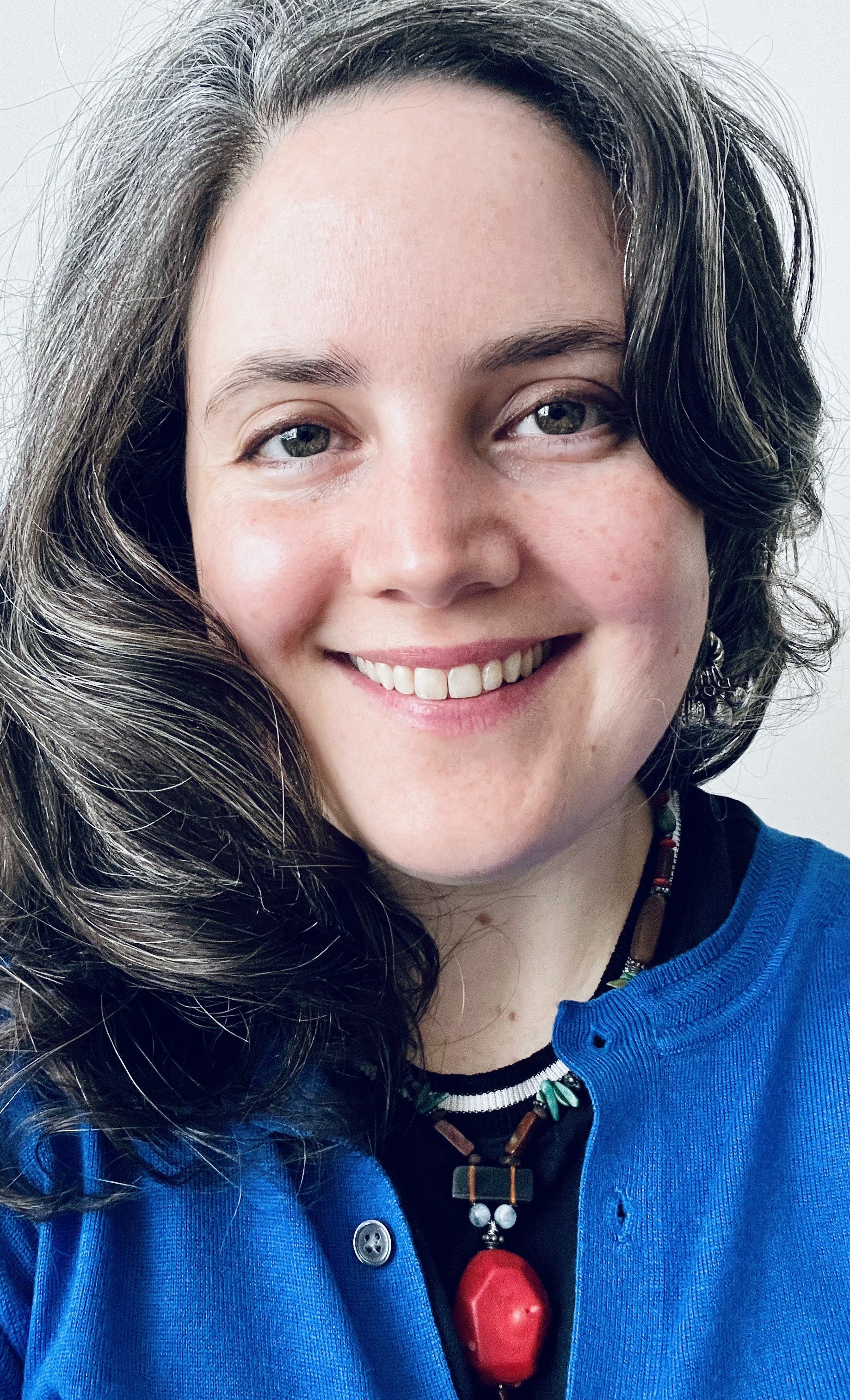
Meet Lindsay
I'm a Licensed Clinical Professional Art Therapist and Board-Certified Art Therapist (LCPAT, ATR-BC®) with more than seven years of experience.
I founded The 3 Brushes to create a therapeutic space where people can slow down, feel supported, and explore experiences that don't always fit neatly into words.
My work focuses on grief, loss, emotional overwhelm, significant life transitions, and complex trauma. I work with children, tweens, teens, and adults through an individualized, collaborative therapeutic process.
Art therapy isn't about making perfect art or being "good" at art. It's about having another way to express, explore, and understand your experience.
You are welcome to begin where you are and move at a pace that feels supportive for you.
Learn About My Approach, Philosophy, and Values →
What Is Art Therapy?
Art therapy is a specialized form of psychotherapy that combines creative expression with therapeutic conversation.
You might draw, paint, work with clay, create a collage, or explore another creative process. Sometimes sessions involve more conversation; other times, art-making becomes a starting point for exploring something difficult to put into words.
You don’t need artistic talent or previous experience. The focus is on your experience, not a perfect piece of artwork.
Together, we may use art therapy and the creative process to:
Express emotions that are difficult to put into words
Explore, identify, address grief and loss
Process difficult or overwhelming experiences
Develop greater self-awareness
Reconnect with yourself
Reflect on memories and relationships
Process meaning during times of change
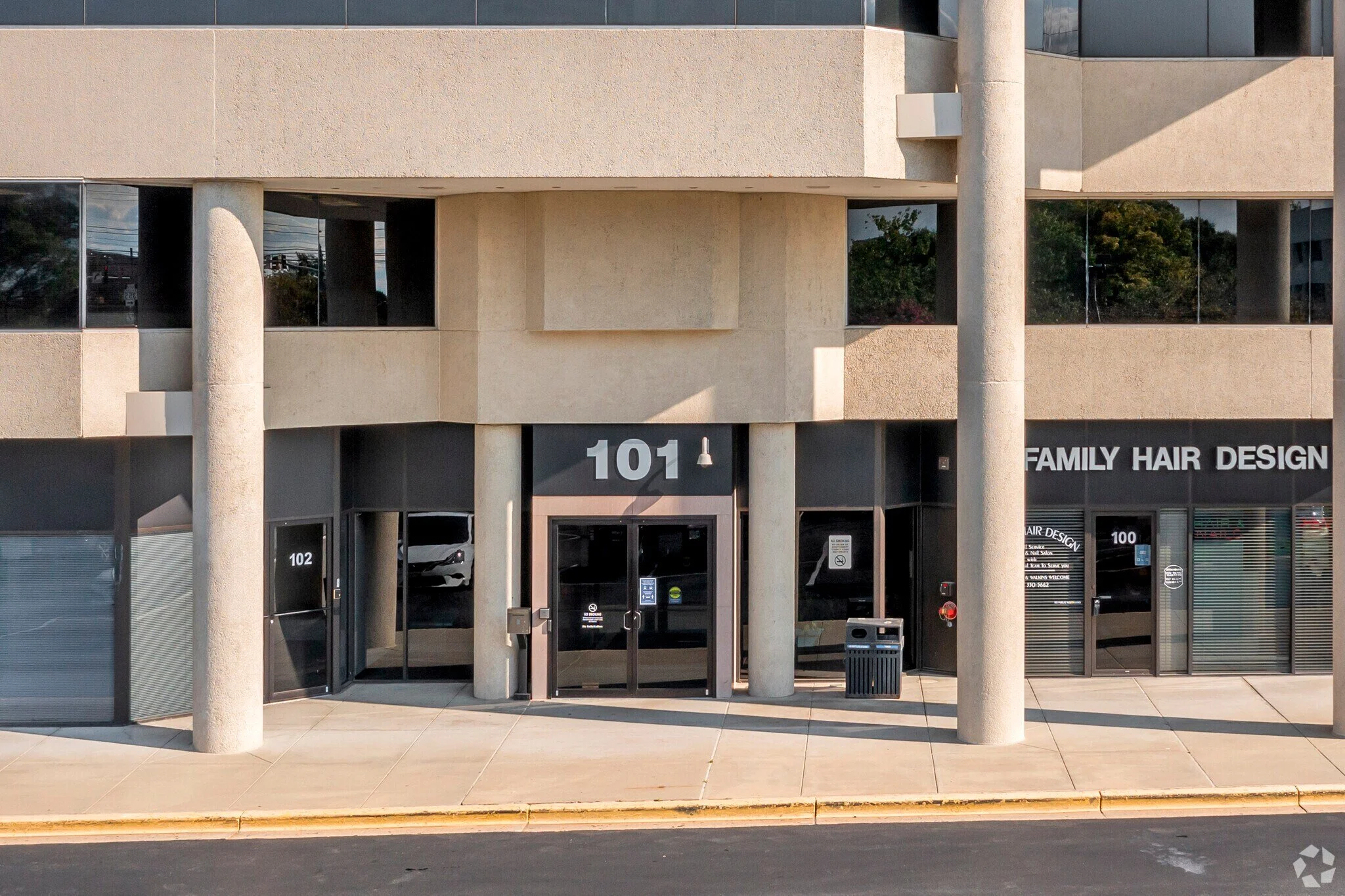
The 3 Brushes, LLC is located in Gaithersburg, Maryland, offering a welcoming, private space for in-person art therapy in Montgomery County. Free parking is available in the lot.
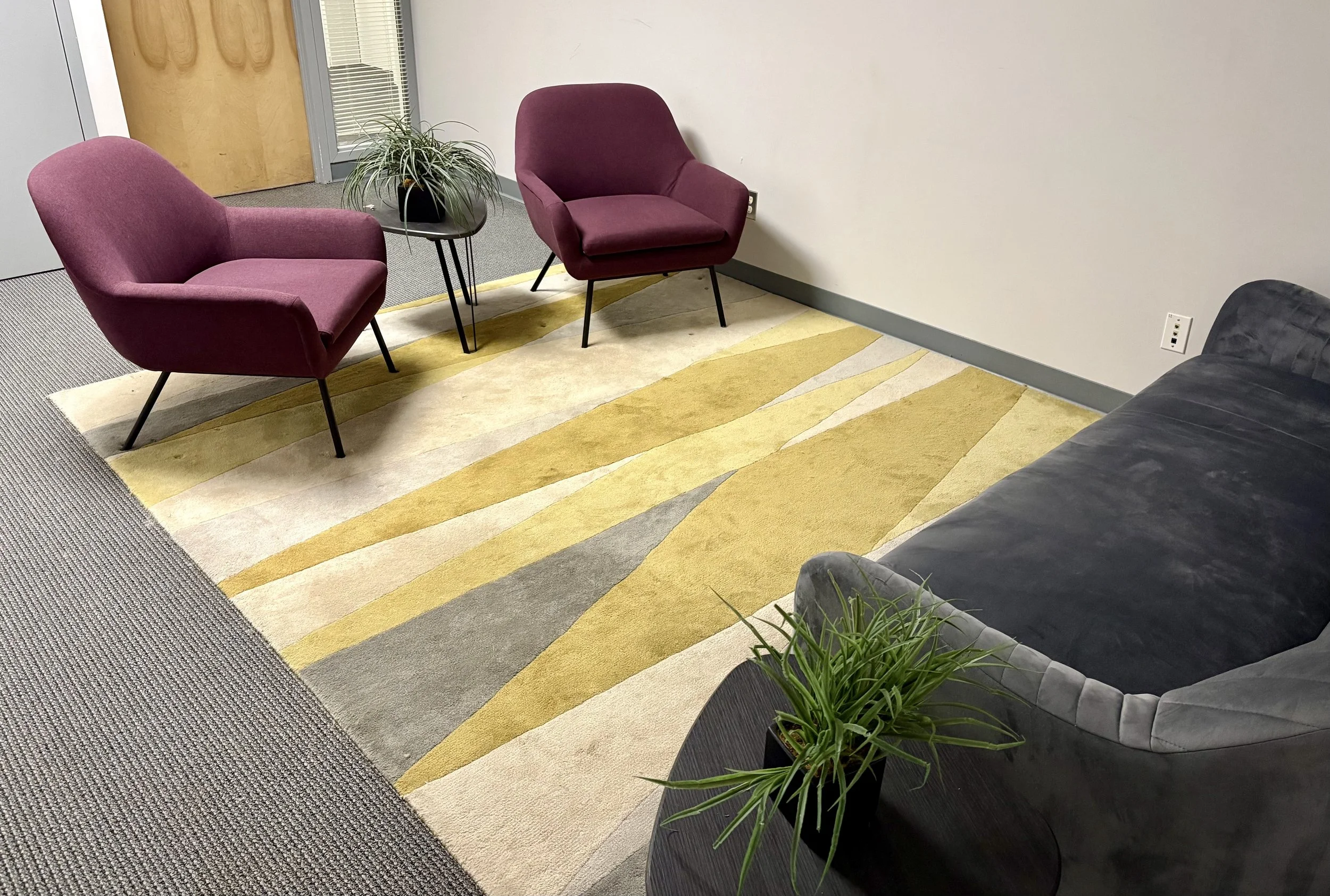
The waiting-area entrance is just off the elevator near Suites 400 and 404. It offers a quiet and comfortable place to pause before your appointment.
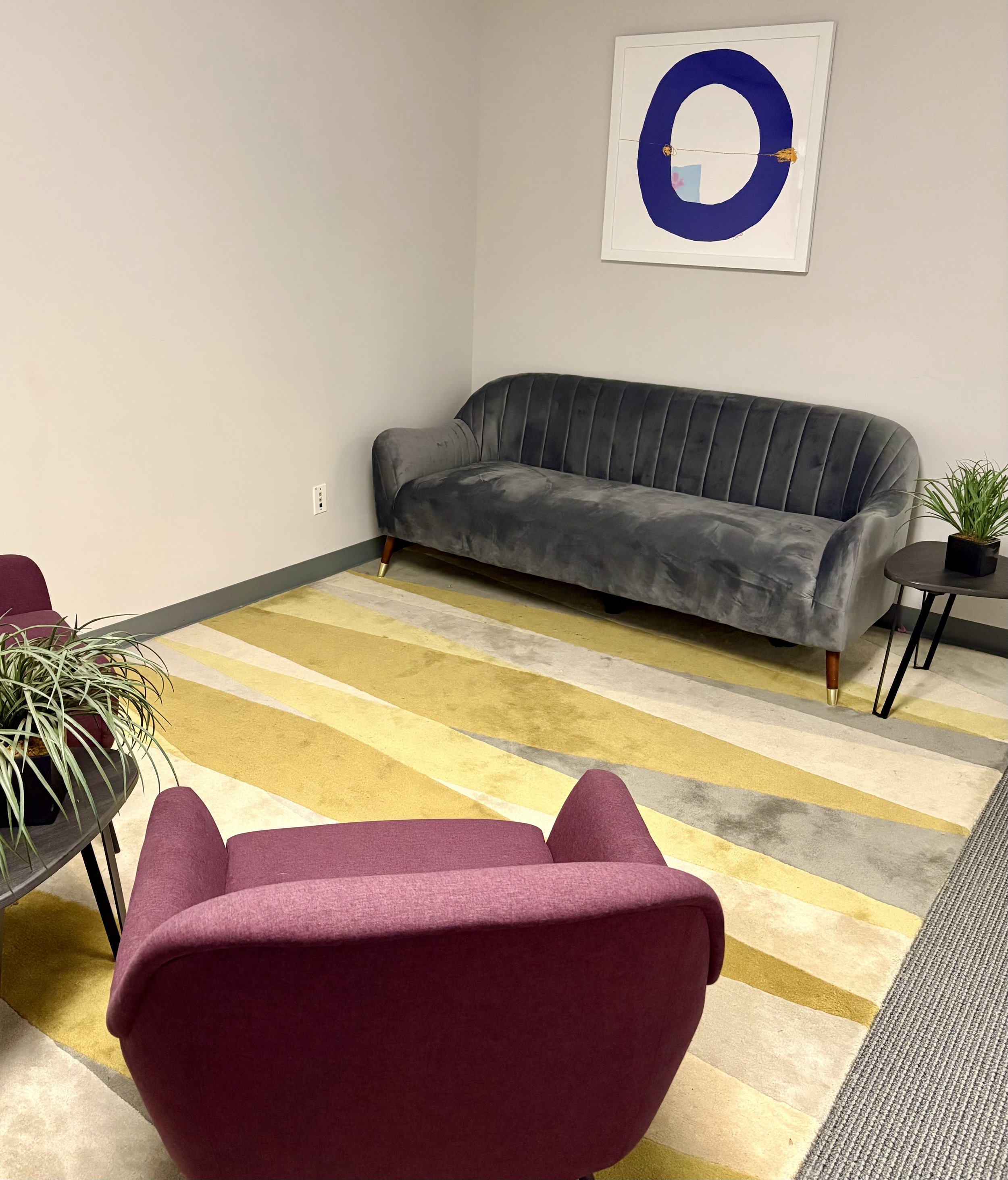
The waiting area in Suite 404 offers a quiet space before sessions begin and serves as a welcoming place for parents and caregivers while children, tweens, and teens participate in art therapy.
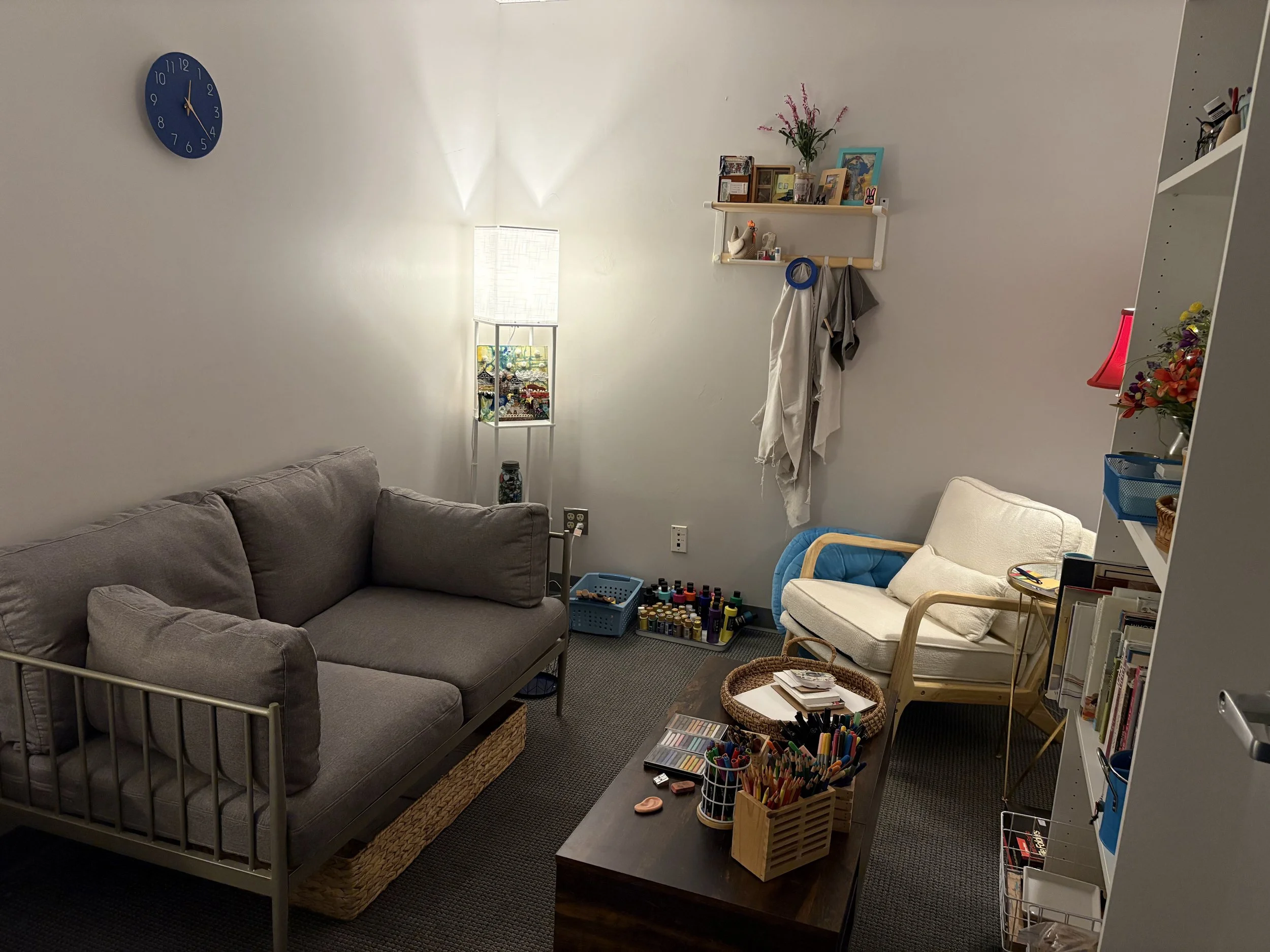
A calm and inviting art therapy space designed for creative expression, reflection, and therapeutic conversation.
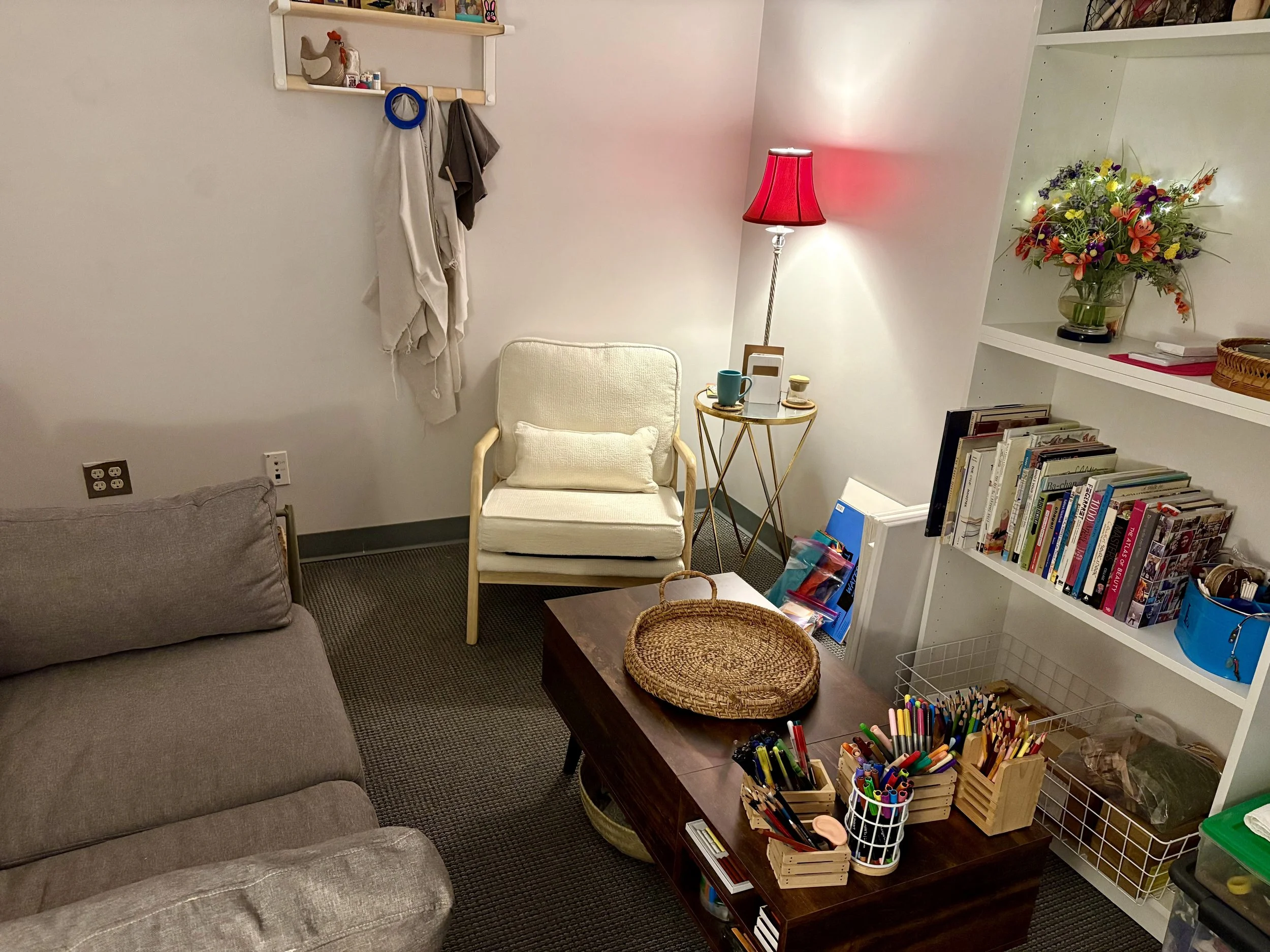
Art materials, reference books, and tools are available for use during sessions, creating opportunities for reflection, exploration, and processing.
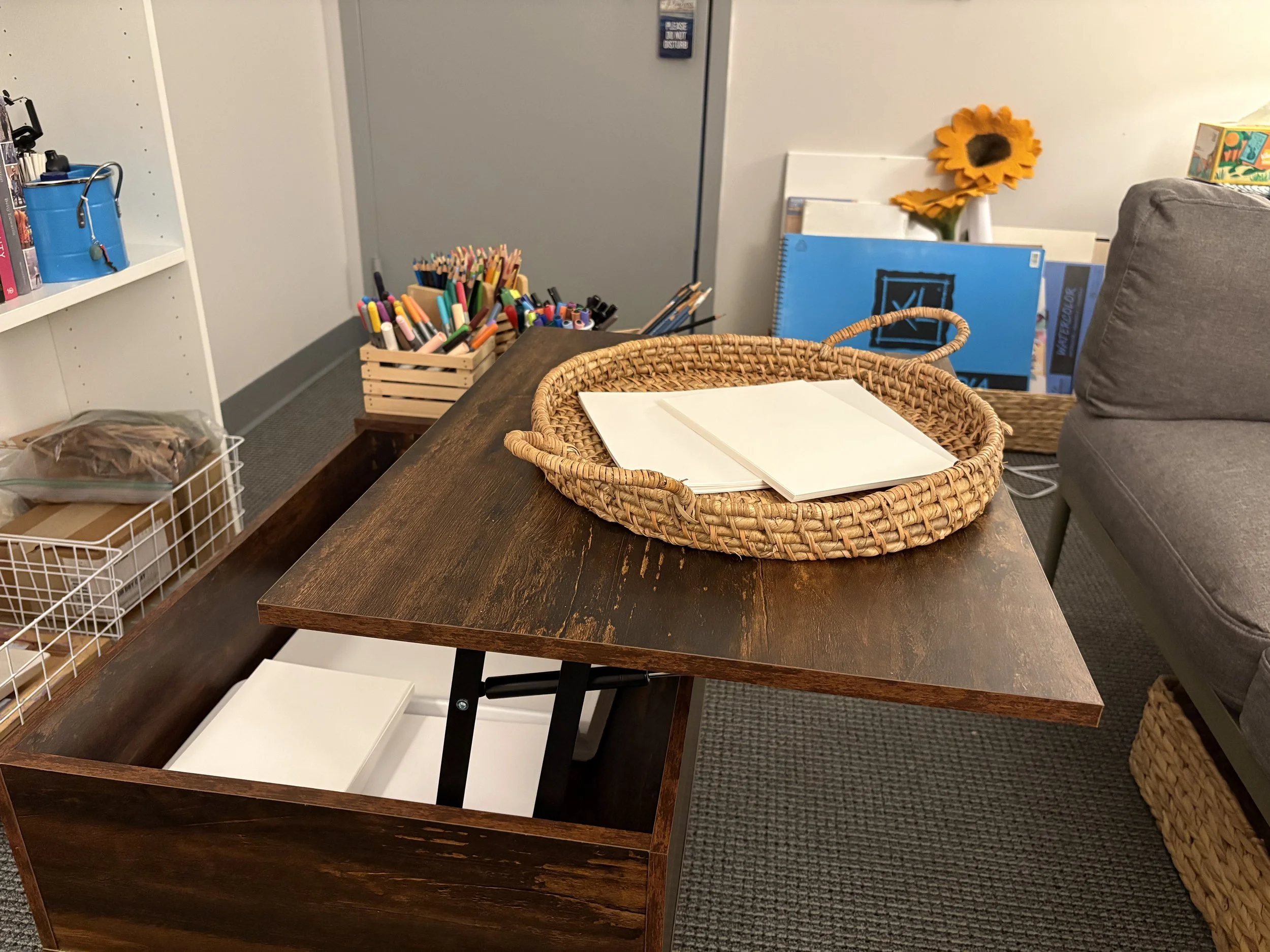
Folding art tabletop available for flexible use, ease of movement, and mobility needs.
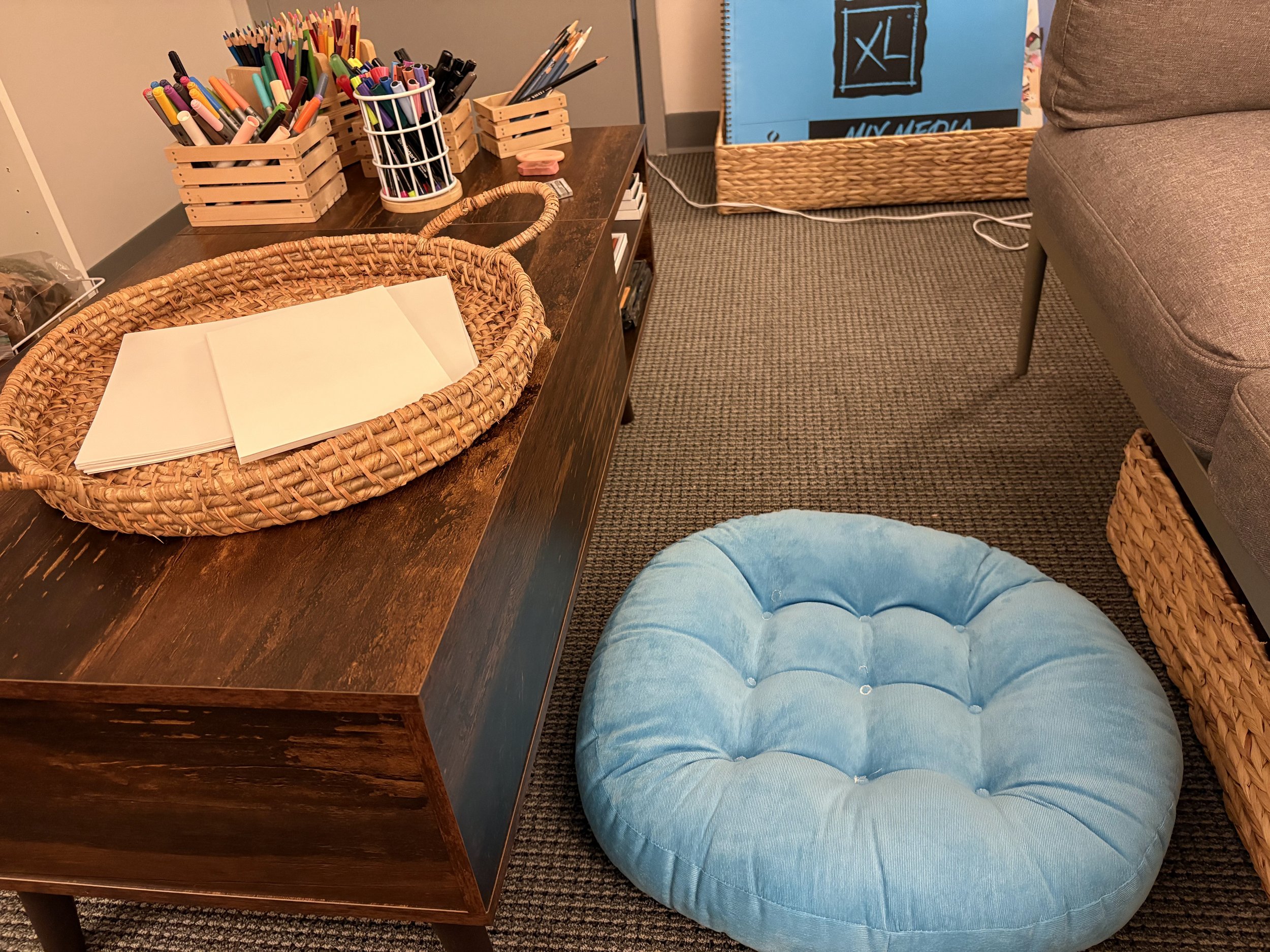
Plush seating pads are available for all ages and for those who enjoy working from the floor or need additional space. A variety of seating options are available throughout the space.
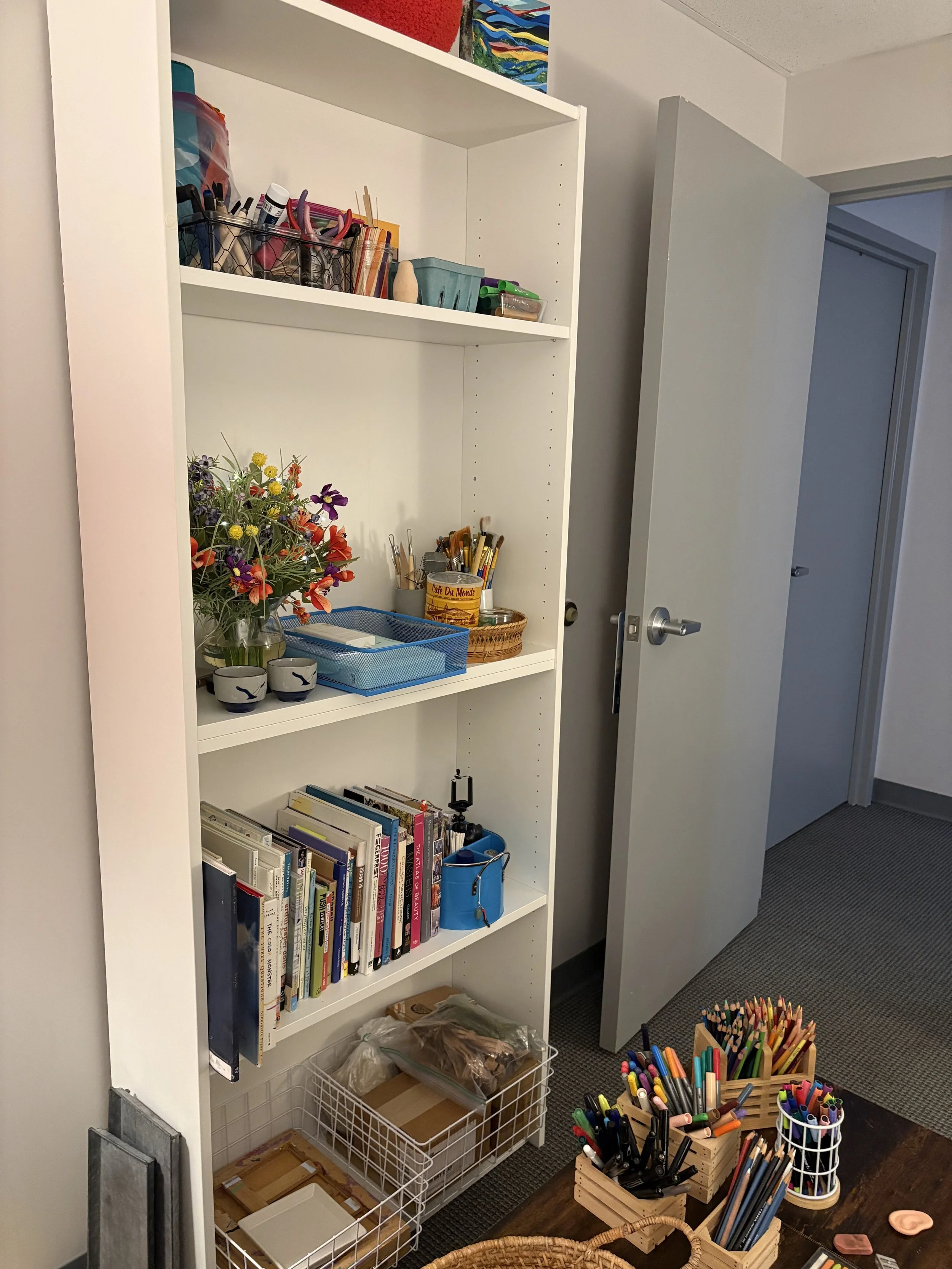
Art supplies, materials, and mediums are readily available for use and thoughtfully displayed for easy access.
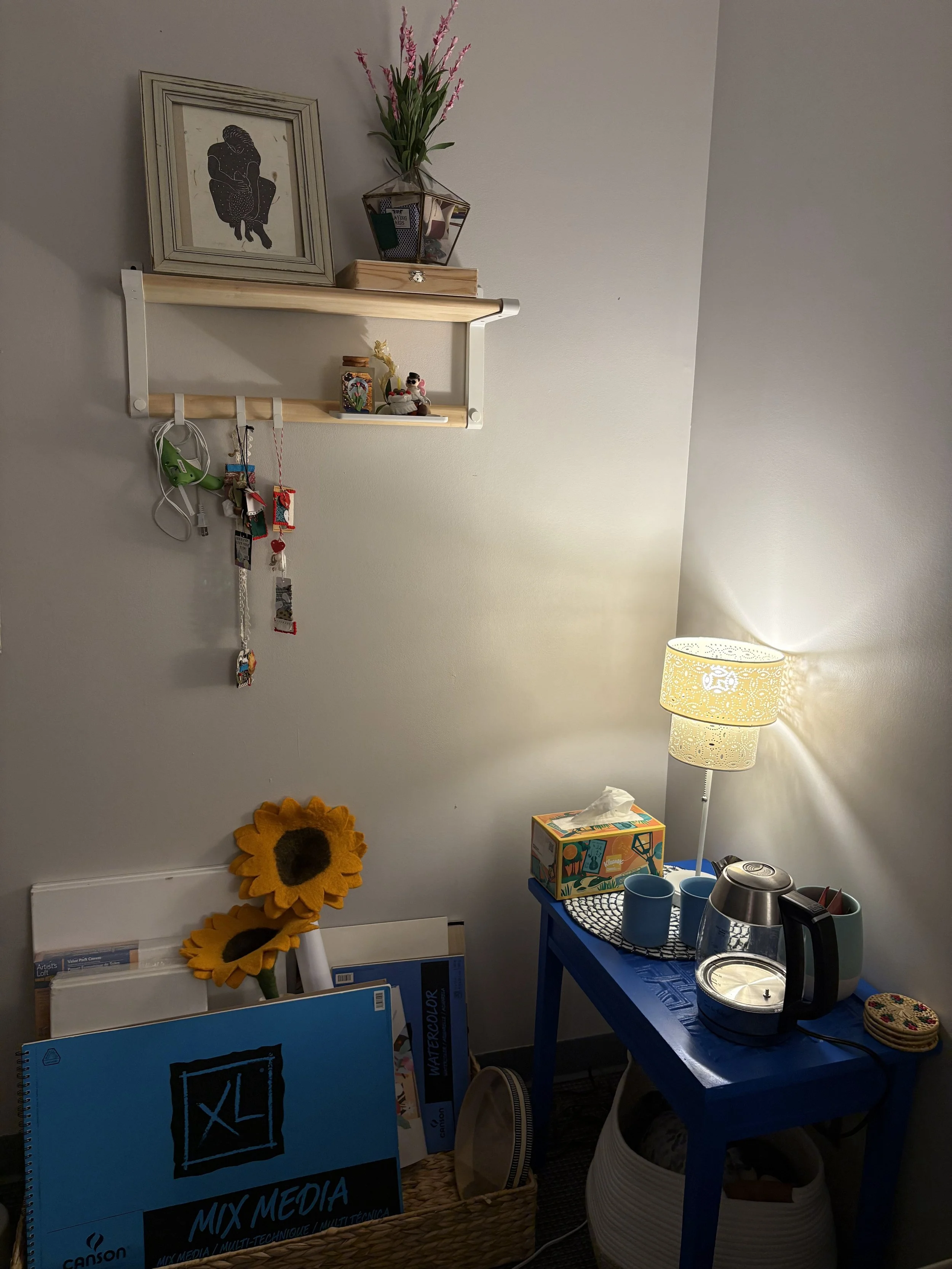
Tea, coffee, and water are available to support comfort and relaxation during sessions, and light refreshments may occasionally be offered as part of creating a welcoming therapeutic space.
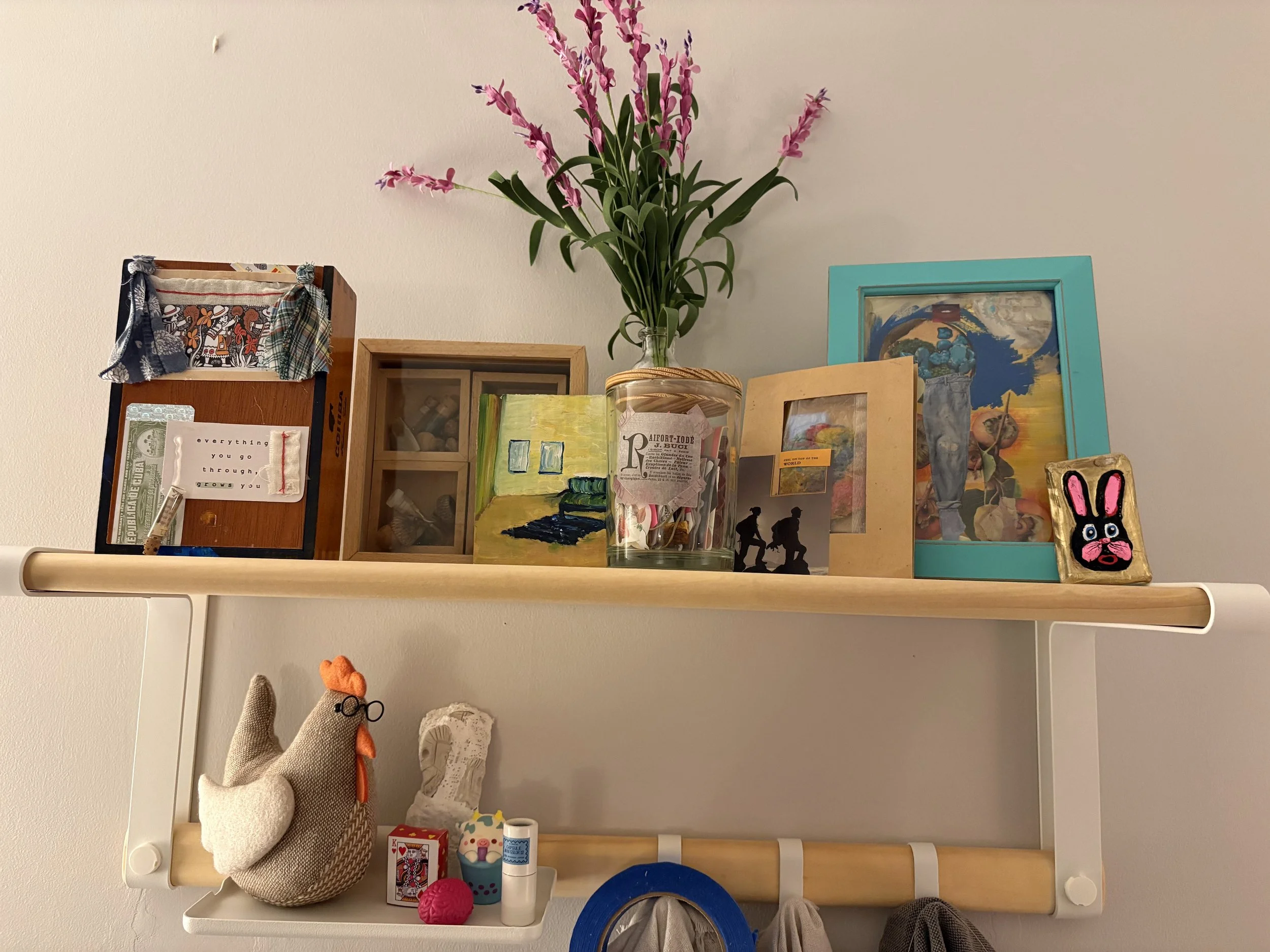
Collections of found objects, permanent artwork, and art gathered locally and during travels are displayed throughout the office and change from time to time.
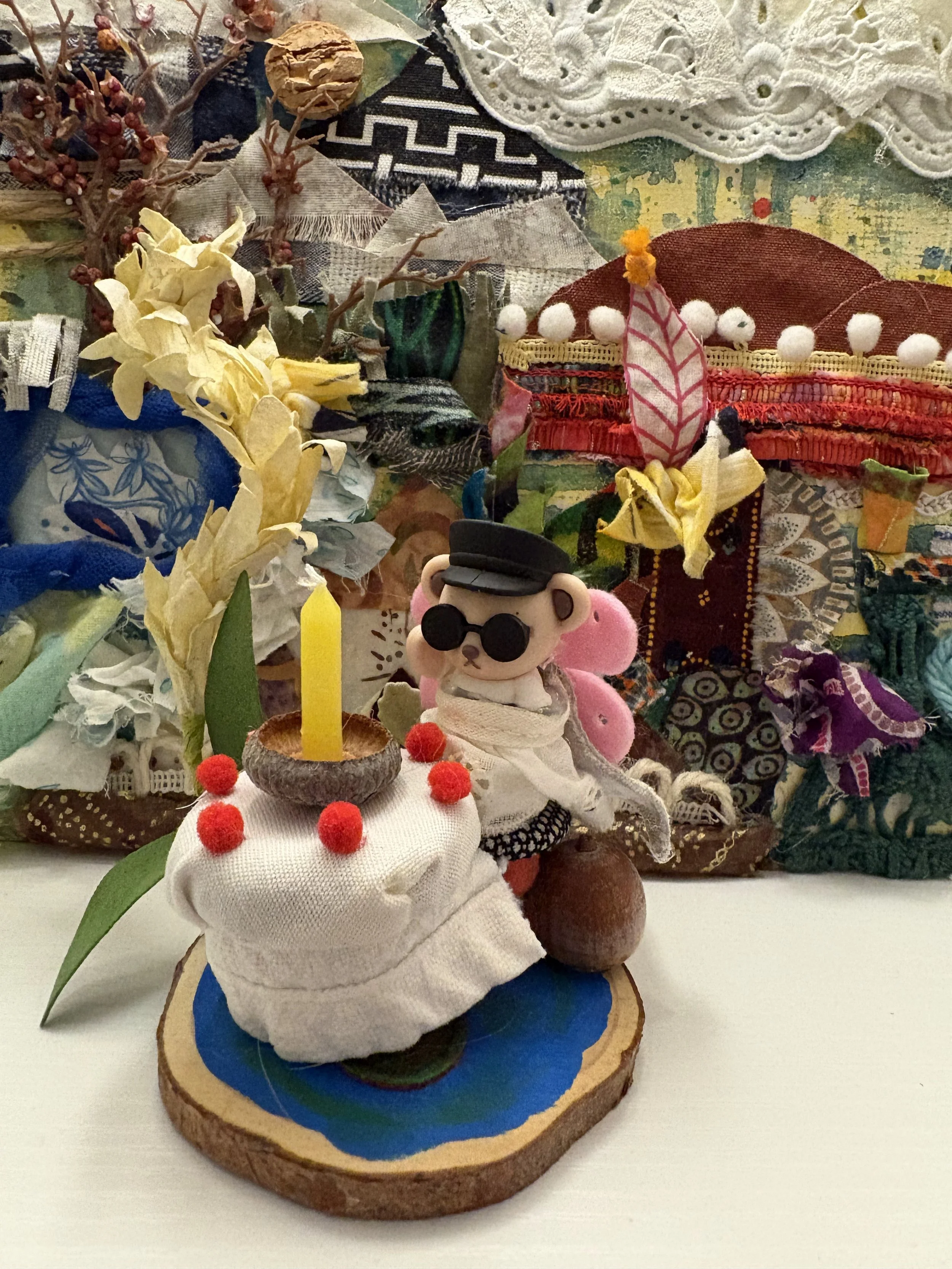
Hidden displays and curated mini art galleries may change with the seasons or feature examples from workshops and art events in the community. Pockets of joy and creative sparks are woven throughout the space.
Flexible Scheduling. Transparent Pricing.
Initial Evaluation · $200
The initial evaluation is an opportunity to discuss what brings you to art therapy, explore your needs and goals in greater depth, and determine whether working together feels like a good fit for ongoing sessions.
1–3 PM · $125 / session
4–8 PM · $150 / session
Choose your preferred time and inquire about availability.
Email Lindsay For Availability

FAQs
-
Art therapy is a psychotherapy that integrates creative expression with trauma-informed and grief-focused clinical care.
You do not need any artistic experience, gifts, or natural artistic talent to participate. The focus is not on creating “good” artwork, but on using the creative process to explore emotions, experiences, and personal growth.
Art therapy can be especially supportive for individuals seeking help with grief and loss, trauma, anxiety, or life transitions, offering additional ways to process experiences that may be difficult to express through words alone.
Art therapists are mental health professionals with master’s-level training in art therapy and clinical practice. In Maryland, practitioners may be licensed as Licensed Clinical Professional Art Therapists (LCPAT) or Licensed Graduate Professional Art Therapists (LGPAT), and may also hold national board certification such as ATR-BC®.
To learn more about the art therapy profession, you may visit the American Art Therapy Association.
-
Grief can feel overwhelming, nonlinear, and difficult to express in words alone.
Art therapy provides a supportive space to process loss through creative expression, reflection, and therapeutic conversation. This can include exploring emotions, honoring memories, and making meaning from life changes over time.
Art therapy may also help when grief feels confusing, emotionally intense, or accompanied by disconnection from self, others, or daily life.
Learn more about:
-
Each session is individualized and may include conversation and discussion, art-making, or a mixture.
Some sessions involve guided prompts or art therapy directives, while others are open-ended creative exploration. You may work with drawing, painting, clay, collage, or other materials depending on your needs and comfort.
Art-making is used to support emotional expression, reflection, and insight. We also use verbal processing to help make sense of what emerges.
There is no “right way” to participate. Sessions are collaborative, paced according to your needs, and focused on emotional safety and meaning-making.
Learn more about SERVICES.
-
Words absolutely have a place in art therapy!
Art therapists use conversation, reflection, and focused discussion to help clients explore their experiences, gain insight, and process emotions.
The balance between verbal discussion and creative expression depends on your goals, preferences, and therapeutic needs. While art-making and the creative process are foundational aspects of art therapy and are encouraged as valuable tools for self-expression and healing, I recognize that words are also an important part of finding and strengthening your voice.
Together, we can use both creative expression and conversation to support your growth, self-understanding, and therapeutic goals.
-
I work with children (7–10), tweens (11–12), teens (13–17), and adults (18+).
Art therapy supports emotional expression at all ages. No artistic experience is required.
For children and adolescents, creative expression can be especially helpful when emotions are difficult to put into words.
Art therapy can support healing, growth, and self-discovery at any stage.
Anyone who thinks, "I can only draw stick figures," that's perfectly okay. You do not need artistic talent or experience to benefit from art therapy.
The focus is not on creating “good” artwork, but on using the creative process to explore emotions, gain insight, and connect more deeply with yourself and others.
-
I primarily offer in-person art therapy in Montgomery County, Maryland.
Virtual sessions are limited and generally reserved for specific circumstances, such as caregiver, legal guardian, or parent sessions conducted separately from child or adolescent sessions.
Clients participating in virtual sessions must be physically located in Maryland at the time of service.
Art materials are the responsibility of the client for virtual sessions, though suggestions and recommendations can be provided if needed.
-
Individual therapy sessions are typically 53–60 minutes.
When separate parent or caregiver sessions are included as part of treatment, those appointments are also typically 53–60 minutes.
Session frequency and the overall length of treatment are individualized according to your needs, goals, and clinical considerations.
-
I am an out-of-network provider and do not bill insurance directly.
Fees
Initial Intake Session: $200
Ongoing Individual Psychotherapy Sessions (53–60 minutes): $150
A limited number of reduced-fee appointments are available at $125 per session during select early-afternoon weekday times. Availability is limited and may vary.
A superbill can be provided for clients who wish to seek possible reimbursement from their insurance company.
Clients may also find it helpful to use Reimbursify
This is an online service that simplifies the process of submitting out-of-network claims. Reimbursify allows clients to submit claims electronically and track their reimbursement status through its platform. The 3 Brushes, LLC is not directly affiliated with Reimbursify.
I encourage you to contact your insurance provider directly to ask about your out-of-network mental health benefits, deductible, reimbursement rate, and any prior authorization requirements.
Reimbursement is determined by your individual insurance plan and is not guaranteed.
-
The office address is located at:
101 Lake Forest Boulevard
Suite 400 & 404
Gaithersburg, MD
20877
-
Please schedule a complimentary 20-minute consultation.
Consultations are an opportunity to discuss what brings you to art therapy and determine whether this approach feels like a good fit. If we decide to move forward, we will review next steps and begin intake and scheduling for an initial evaluation session.

What’s The Word?
This section highlights what’s new and noteworthy at The 3 Brushes, LLC.
Community Contracting & Partnerships
Looking to enhance your wellness programming, collaborate on a workshop, or explore a community partnership?
Collaborate with The 3 Brushes, LLC →
Mark Your Calendars!
Explore upcoming events, workshops, and community programming.
Visit the Studio Page →
My Studio Practice
To Make Art Is to Respond, Reflect, and Resolve
Alongside my work as an art therapist, I maintain an active studio practice as an artist. My artwork explores themes of grief, healing, nature, emotional transformation, and the human experience.
The studio is separate from the art therapy practice, but it reflects the same belief that art can help us pause, notice, respond, and make meaning from what we experience.
I believe that to make art is to give form to what is felt, remembered, and experienced. It may mean responding to an experience, staying with what emerges, or bringing something toward greater clarity and understanding.
I invite you to explore the Studio page which features current original artwork inspired by themes of grief, healing, emotional transformation, nature, and the human experience. Each piece offers an opportunity for reflection, connection, and encouragement.
Visit The 3 Brushes, LLC
The 3 Brushes, LLC offers a cozy, private, and welcoming space for in-person art therapy in Gaithersburg, Maryland.
The office includes a variety of art materials, from drawing and painting supplies to clay, collage, mixed media, and found objects, along with a comfortable therapeutic space.